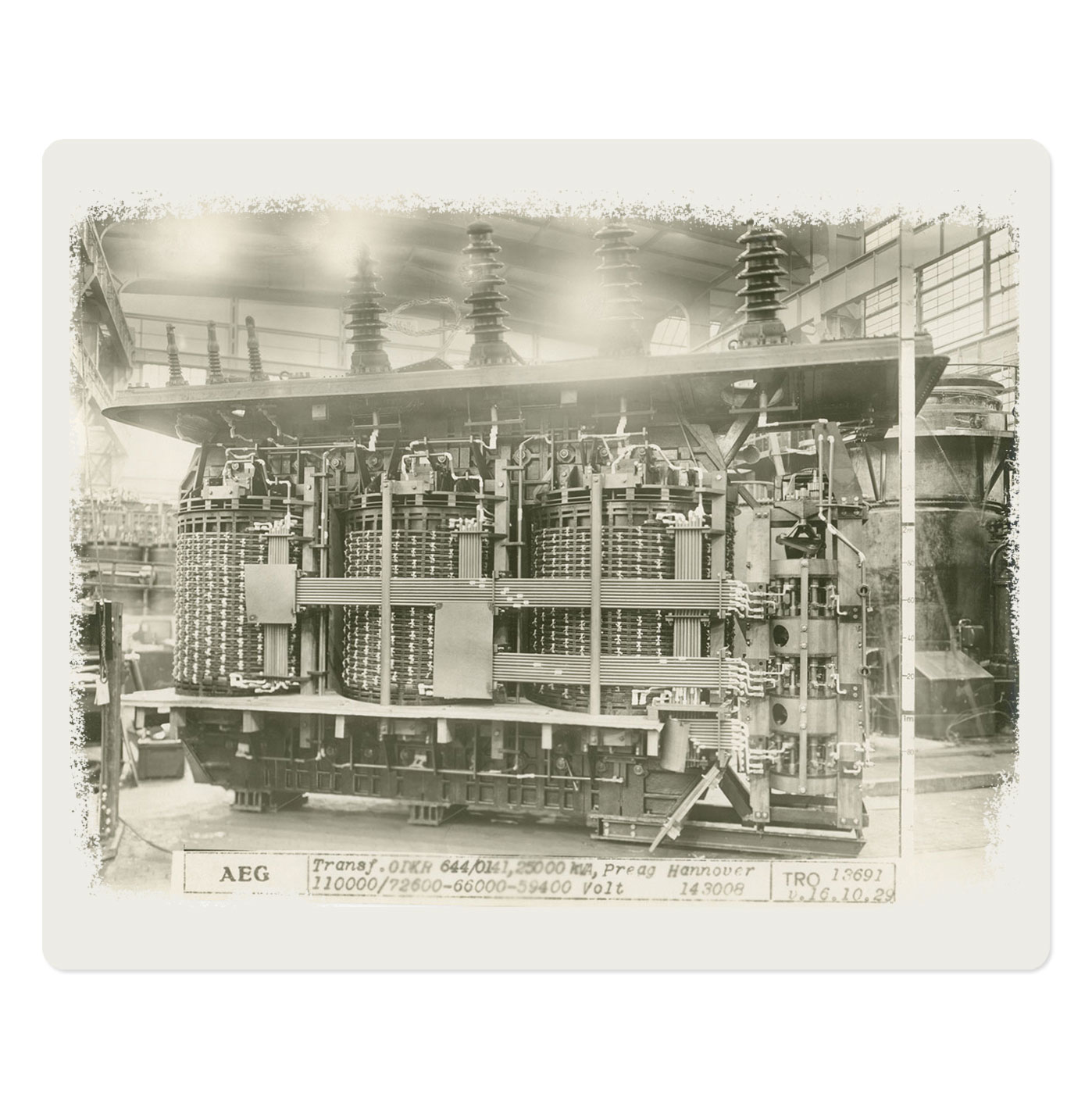
In 1933, the first selector switch marked the starting point for a technological development that would gradually turn the on‑load tap changer into a key component of modern power transformers.
Type C was the first on-load tap-changer not produced by transformer manufacturers and MR's first one. Designed as a selector switch combining the functions of “selecting a tap” and “transferring the load current from the service position to the next one” into one enclosure. This type was manufactured for more than 40 years and was continuously improved and further developed during that time. Type C was available as single-phase and three-phase for neutral point and delta connected transformer windings. Due to the selector switch design, the number of possible tap positions was limited and only variable to a limited extent.
As expansion of the product range and to meet the demand of transformers in the lower power rating segment MR’s Type B was introduced, based on the same switching principle but with more compact dimensions and reduced electrical performance data.
New requirements to regulate distribution transformers needed even smaller OLTCs. MR’s response to this need was the development of selector switch Type A, which represented the next step towards smaller dimensions and reduced electrical key data. This type was introduced as a cost saving OLTC for distribution transformers with very compact dimensions but fewer tap positions.