A True Evolution: 100 Years of On‑Load Tap Changers

Like every successful technology, the on‑load tap changer has not evolved in a linear way. Over the decades, new design principles, materials, and application classes emerged—developing in parallel, branching out, and repeatedly recombined. This evolution tells the story of a technical system that has continuously adapted to changing energy, grid, and market requirements—leading up to today’s integrated vacuum era.

  • Evolution
    • Year / Period
      • 1933 – 1977
      • 1978 – 1999
      • 2000 – 2026
    • Power Grids
      • Extra‑High‑Voltage Grids
      • High Voltage Grids
      • Distribution Grid
    • EN: Löschmittel
      • Oil
      • Vacuum
      • Dry
    • Switch
      • Diverter Switch
      • Selector Switch
    • Insulation
      • Pressboard
      • GFRP
  • Reset filter
Back to list
  • 2000 – 2026
  • Extra‑High‑Voltage Grids
  • High Voltage Grids
  • Vacuum
  • Diverter Switch
  • GFRP
2025

When Evolution Becomes Integration
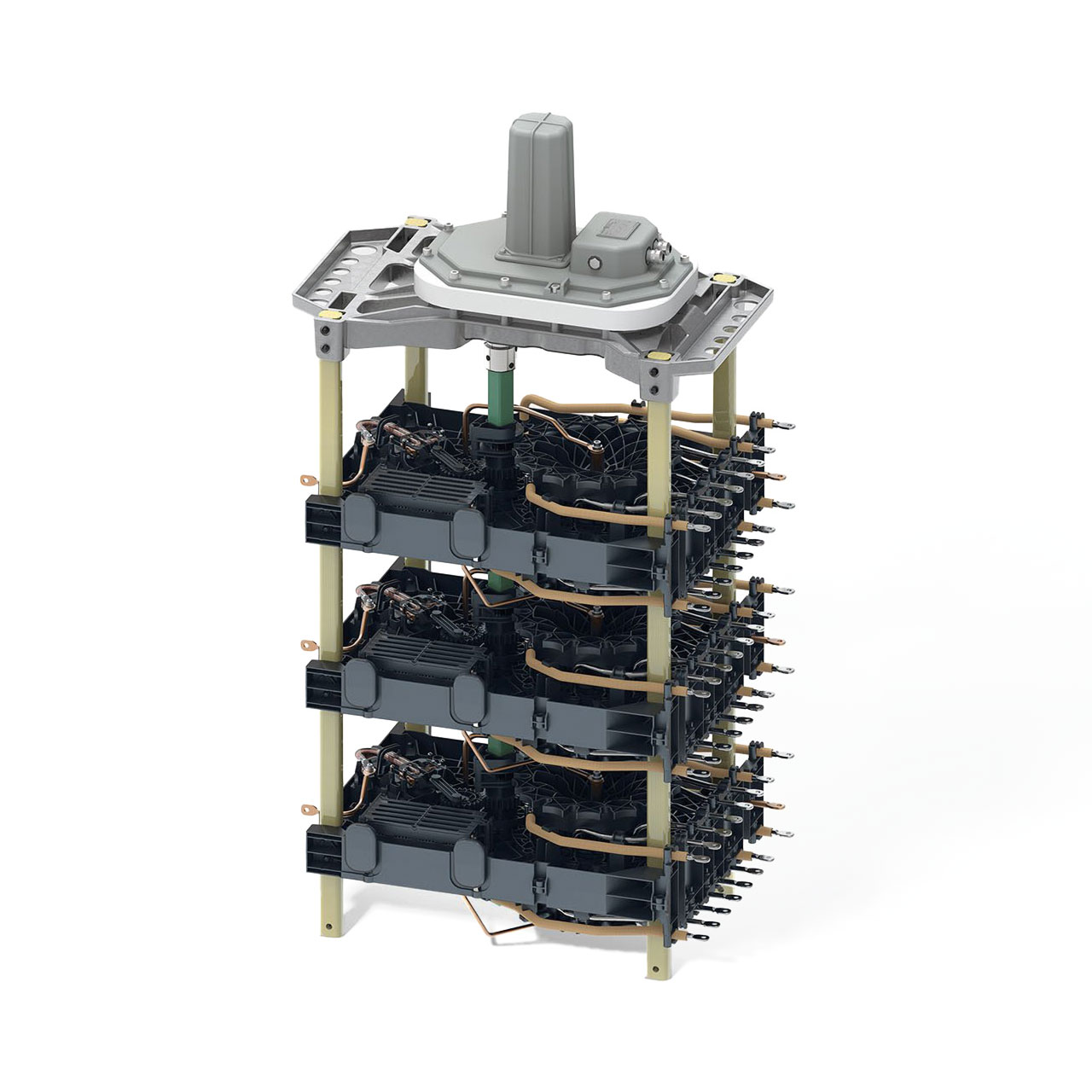
Type VACUTAP® VI

After one hundred years of development, switching technology and the transformer merge—marking the start of a new generation of power transformers.

With the introduction of vacuum technology, it became unnecessary to separate the transformer’s oil system from that of intank type tap-changer. Nevertheless, the external design of intank type tap-changers remained virtually unchanged for many years: a cylindrical oil compartment continued to separate the two oil systems. After gaining considerably experience with ECOTAP® VPA the world first integrated type tap-changer for power transformers was brought to market: the VACUTAP® VI. The first OLTC of the 3rd* tap-changer generation was developed to enable “better” transformers: Increased power density or smaller footprint of the transformer, elimination of accessories such as protective relays, dehumidifiers, and oil level indicators, and simplified integration of OLTC into the transformer are just a few of the advantages made possible by this design without oil compartment.