A True Evolution: 100 Years of On‑Load Tap Changers

Like every successful technology, the on‑load tap changer has not evolved in a linear way. Over the decades, new design principles, materials, and application classes emerged—developing in parallel, branching out, and repeatedly recombined. This evolution tells the story of a technical system that has continuously adapted to changing energy, grid, and market requirements—leading up to today’s integrated vacuum era.

  • Evolution
    • Year / Period
      • 1933 – 1977
      • 1978 – 1999
      • 2000 – 2026
    • Power Grids
      • Extra‑High‑Voltage Grids
      • High Voltage Grids
      • Distribution Grid
    • EN: Löschmittel
      • Oil
      • Vacuum
      • Dry
    • Switch
      • Diverter Switch
      • Selector Switch
    • Insulation
      • Pressboard
      • GFRP
  • Reset filter
Back to list
  • 2000 – 2026
  • Extra‑High‑Voltage Grids
  • High Voltage Grids
  • Vacuum
  • Diverter Switch
  • GFRP
2000

A New Medium Changes the Course
Types VT and VV

The introduction of vacuum technology marks the beginning of a new phase—with longer service life, reduced wear, and new possibilities.

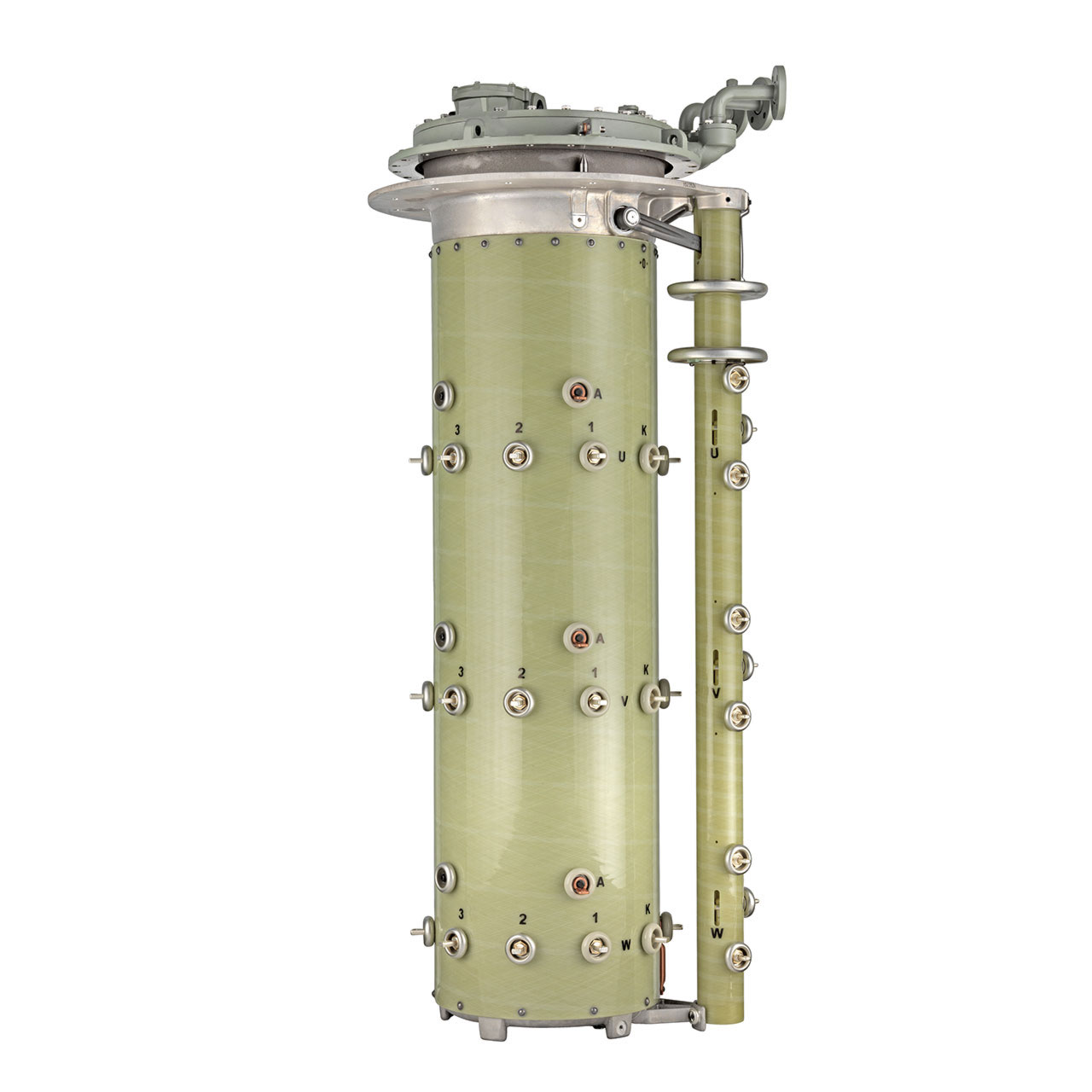
As with the Type M, MR has ushered in a new era with vacuum switching technology with its Type VT.

One of the main issues with an oil-filled OLTC is the oil degradation caused by switching arcs. This is especially true for selector switches, as the insulating oils for the switching duty and the overall device insulation are not separated. It was therefore logical to begin leveraging the advantages of switching with vacuum interrupters in the selector switch design, particularly since electrical parameters such as load current and voltage insulation seemed more manageable. The result was MR’s Type VV, the first OLTC for power transformers in the lower and medium power ranges to utilize vacuum switching technology. It is thus the first of its kind.